
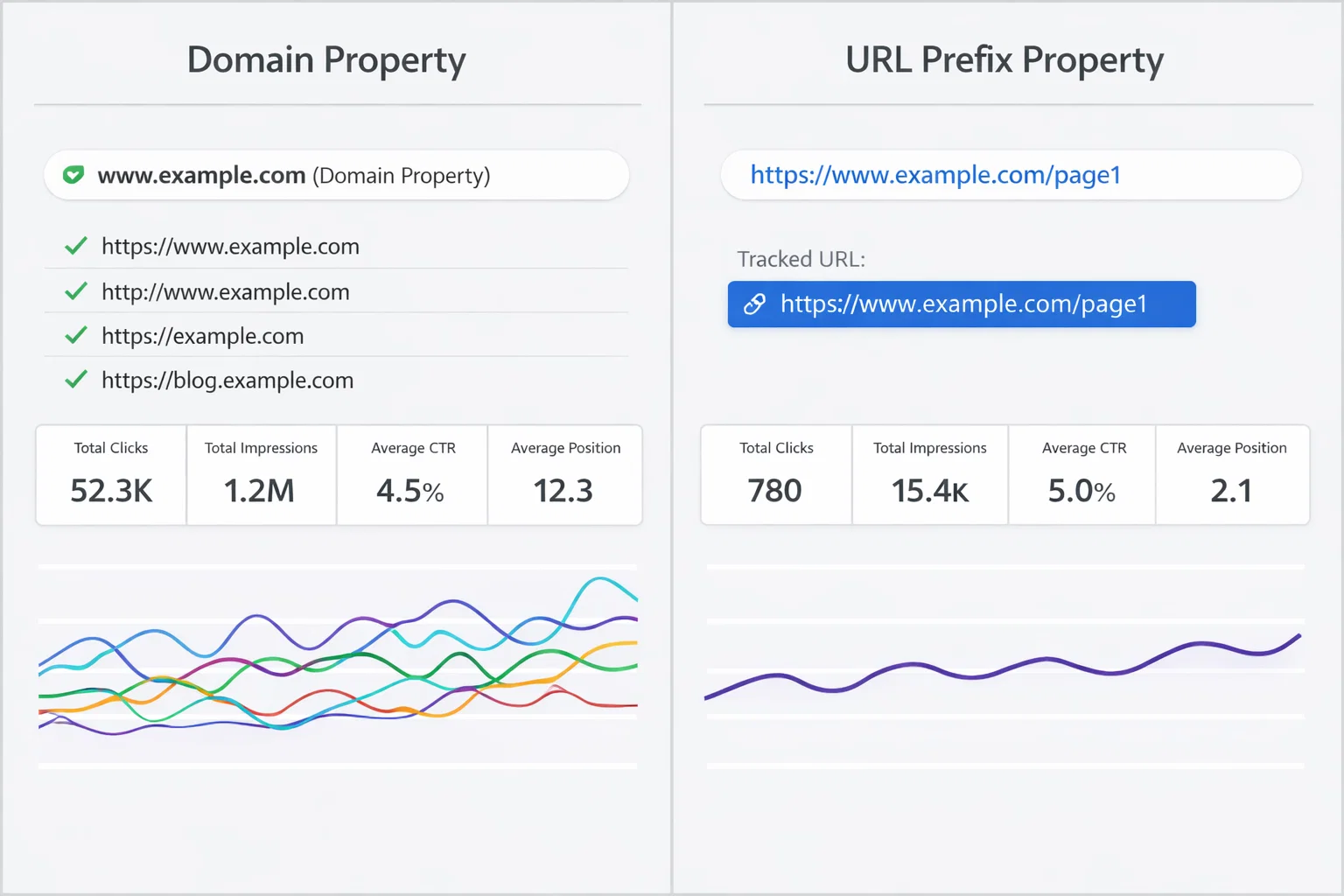
In Google Search Console, a Domain property tracks all subdomains and protocols for a website, while a URL prefix property tracks only one specific URL version. The main difference is coverage and verification: domain properties give complete site data, while URL prefix properties offer more flexible verification options.
Key Takeaways
- ✔ Domain properties track all subdomains and protocols in one place
- ✔ URL prefix properties track only one exact URL version
- ✔ Domain properties require DNS verification
- ✔ URL prefix properties support multiple verification methods
- ✔ Using both properties together often provides the best insights
What Is a Domain Property in Google Search Console?
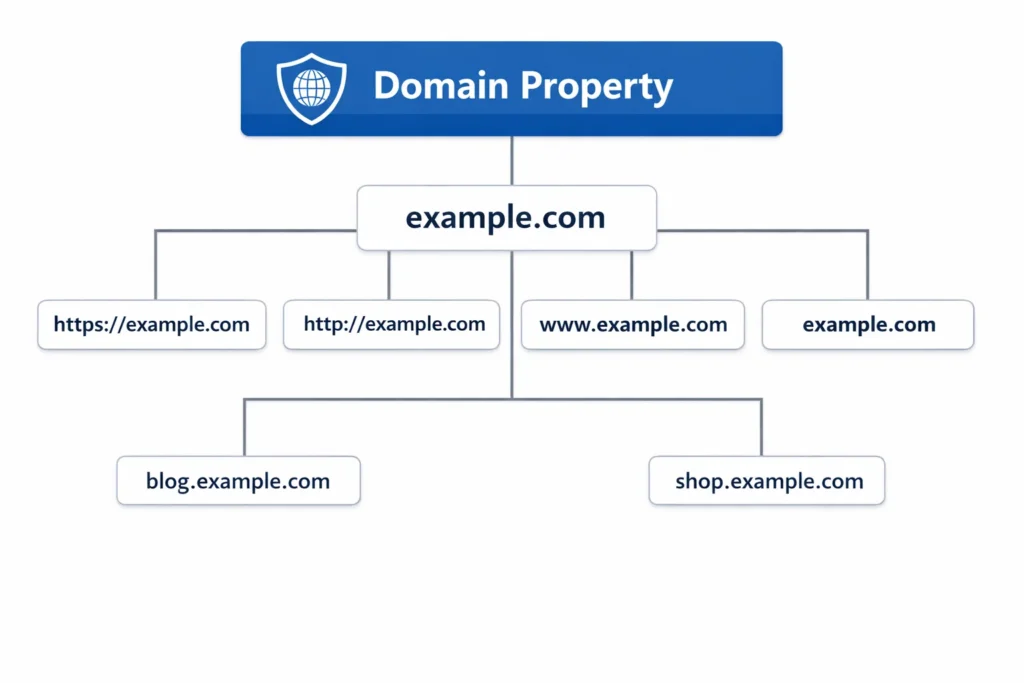
A Domain property in Google Search Console tracks all versions of your website under a single domain. This includes every protocol and subdomain associated with that domain, giving you a complete view of search performance.
A domain property includes:
- http and https versions
- www and non-www versions
- All subdomains (such as blog.example.com or shop.example.com)
Domain properties can only be verified using a DNS record, which confirms ownership at the domain level. Because of this, they are the most comprehensive option for long-term SEO tracking.
What Is a URL Prefix Property in Google Search Console?
A URL prefix property in Google Search Console tracks data for one specific URL version only. This means it includes only the exact protocol, subdomain, and path you verify, and nothing else.
A URL prefix property includes:
- One protocol (http or https, not both)
- One subdomain (www or non-www, not both)
- Optional path-level tracking (for example, example.com/blog/)
URL prefix properties support multiple verification methods, such as HTML file upload, meta tag, Google Analytics, or Google Tag Manager. They are useful when you want to track or test a specific section of a site or don’t have DNS access.
Google Search Console Domain vs URL Prefix — Explained Clearly
| Scenario | Domain Property | URL Prefix Property | Why This Matters |
| You want to track your entire website | Automatically includes all versions (http, https, www, subdomains) | Only tracks the exact URL you add | Domain properties prevent missing SEO data |
| Your site has multiple subdomains | All subdomains are included in one view | Each subdomain must be added separately | URL prefix properties fragment your data |
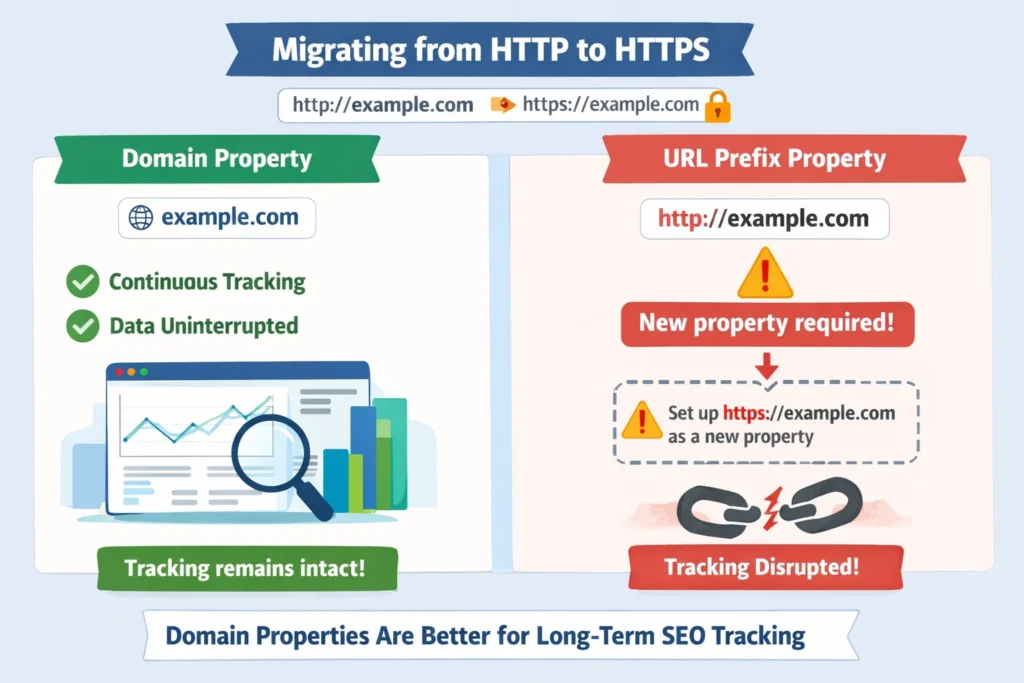
| You migrate from http to https | No new setup required | A new property must be added | Domain properties save time during migrations |
| You don’t control DNS settings | Cannot be verified | Can be verified via file, tag, GA, or GTM | URL prefix is easier without DNS access |
| You want quick setup for testing | Slower (DNS changes needed) | Faster and simpler | URL prefix works well for short-term needs |
| You want long-term SEO reporting | Best option | Not recommended alone | Domain properties give full SEO visibility |
Simple takeaway
- ✔ Domain property = best for full, long-term SEO tracking
- ✔ URL prefix property = useful for specific URLs or limited access
- ✔ Best practice = use both, but rely on the domain property as your main one
Domain vs URL Prefix: Which One Should You Choose?
The right Google Search Console property depends on your goal, access level, and site setup, but for most websites, one option is clearly better.
Choose a Domain Property if:
- You want complete SEO data for your entire website
- Your site uses multiple subdomains or protocols
- You plan long-term SEO tracking and reporting
- You have access to DNS settings
A domain property minimizes the risk of missing data and is the recommended default for most site owners and SEO professionals.
Choose a URL Prefix Property if:
- You don’t have access to DNS records
- You only need to track a specific URL or folder
- You’re testing, migrating, or auditing part of a site
- You want faster setup using file or tag verification
URL prefix properties are useful in specific cases, but they should not replace a domain property for full-site SEO tracking.
Best Practice Recommendation
For the most accurate insights, use both properties:
- Rely on the domain property for primary SEO reporting
- Use URL prefix properties for testing, validation, or focused analysis
SEO Portfolio Highlight: Tire Wholesale Brand
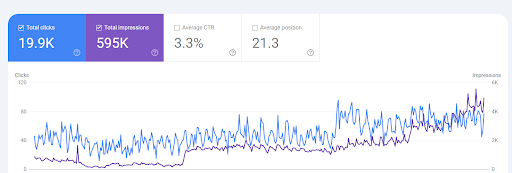
For a tire wholesale brand, an SEO strategy was implemented to increase organic visibility and attract high-intent B2B search traffic in a competitive automotive niche.
SEO results achieved:
- 19,900+ organic clicks
- 595,000+ search impressions
- 3.3% average CTR
- Average position improved to 21.3
- Clear upward growth trend in Google Search Console
The growth was driven by keyword-focused category optimization, technical SEO improvements, and content alignment with buyer intent to strengthen organic performance at scale.
Want similar SEO results for your wholesale or automotive business in the USA? Work with an experienced SEO Specialist USA to grow visibility and qualified organic traffic.
FAQs: Google Search Console Domain vs URL Prefix
What is the main difference between a domain property and a URL prefix property?
A domain property tracks all subdomains and protocols under one domain, while a URL prefix property tracks only one exact URL version. The difference is mainly in data coverage and verification method.
Which Google Search Console property should I use?
For most websites, a domain property is recommended because it provides complete site-wide data. A URL prefix property is useful if you only need to track a specific URL or don’t have DNS access.
Does a domain property include all subdomains?
Yes. A domain property automatically includes all subdomains, such as www, blog, or shop, as well as both HTTP and HTTPS versions of the site.
Can I verify a domain property without DNS access?
No. Domain properties require DNS verification. If you cannot modify DNS records, you should use a URL prefix property, which supports alternative verification methods.
Do I need multiple URL prefix properties?
Yes, if your site uses multiple protocols or subdomains, each version must be added separately as its own URL prefix property to track all data.
Is it okay to use both domain and URL prefix properties?
Yes. Many SEO professionals use both. The domain property is used for complete SEO reporting, while URL prefix properties help with testing, migrations, or focused analysis.
Will deleting one property affect my website or rankings?
No. Removing a property from Google Search Console does not affect your website or search rankings. It only removes access to that property’s data in your account.
Discover More Guides with SEO Specialist USA