
The foundational elements for SEO with AI include high-quality content, optimized technical structure, relevant keywords, user experience, and authoritative backlinks. AI tools enhance these elements by analyzing data, identifying opportunities, and automating optimization, helping websites rank higher and perform better in search results.
Key Takeaways
-
 AI enhances traditional SEO elements like content, keywords, and technical optimization.
-
Foundational elements include content quality, site structure, user experience, and backlinks.
-
AI tools help identify opportunities, automate tasks, and improve decision-making.
-
Combining AI with SEO fundamentals ensures better rankings and organic traffic.
-
Monitoring and refining strategies with AI leads to continuous SEO improvement.
How AI is Changing SEO
Artificial intelligence is transforming SEO by providing data-driven insights, predictive analytics, and automation capabilities. AI can analyze vast amounts of search and user behavior data, uncovering patterns humans might miss.
Key impacts of AI on SEO:
- Content Analysis: AI evaluates what content resonates with audiences and predicts trends.
- Keyword Insights: AI identifies high-performing keywords and semantic variations for better targeting.
- Automation: AI can automate repetitive SEO tasks like meta tag optimization and site audits.
- User Experience: AI tools help optimize page layout, load speed, and personalization.
By integrating AI into SEO practices, websites can become more adaptive, efficient, and aligned with search engine algorithms.
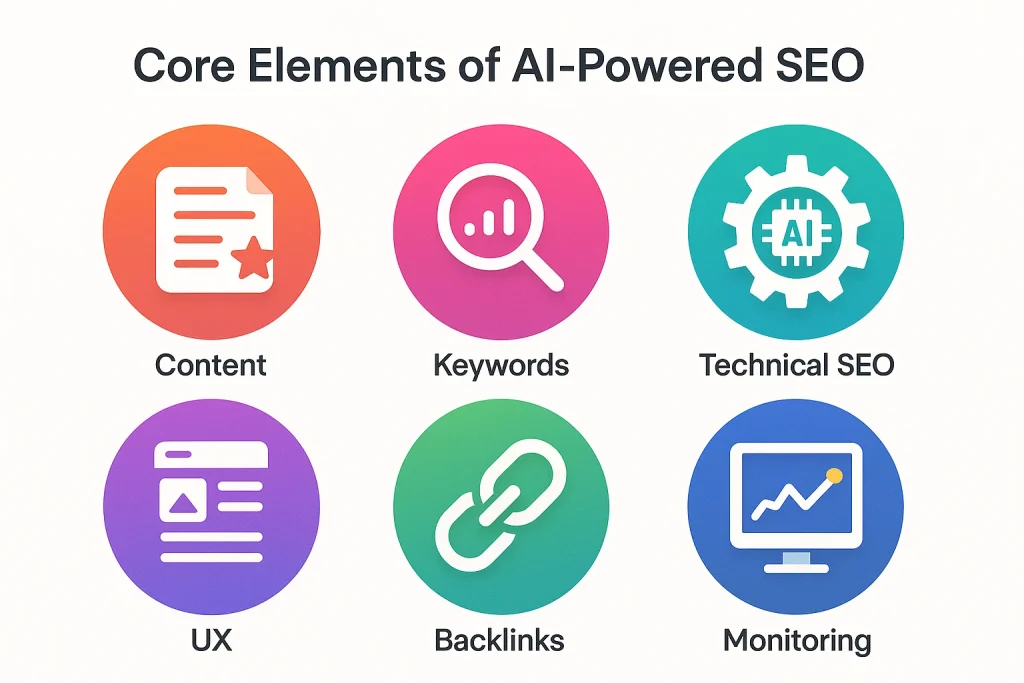
Core Elements of AI-Driven SEO
To build a strong SEO foundation with AI, focus on these core elements:
- High-Quality Content: AI helps identify topics, optimize readability, and ensure content aligns with user intent.
- Keyword Strategy: AI tools analyze search patterns, long-tail opportunities, and semantic keywords.
- Technical SEO: AI audits site speed, mobile optimization, structured data, and crawlability.
- User Experience (UX): AI evaluates page layouts, navigation, and engagement metrics to enhance UX.
- Backlink Analysis: AI identifies authoritative linking opportunities and monitors link health.
- Performance Monitoring: AI tracks rankings, traffic, and conversion metrics for continuous optimization.
Focusing on these elements ensures your SEO strategy is data-driven, efficient, and effective.
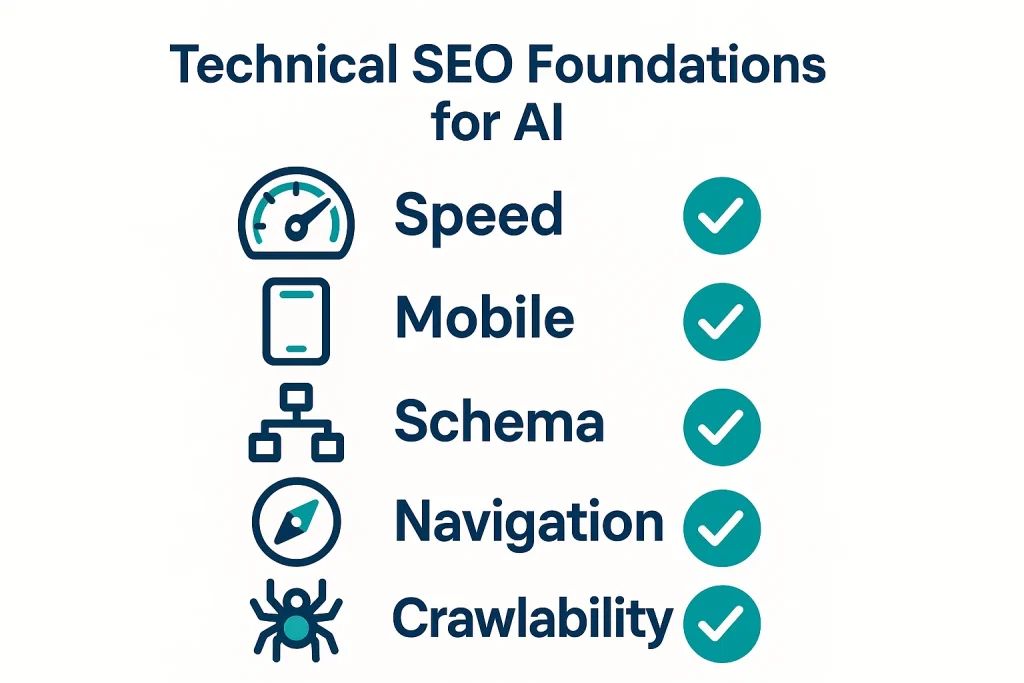
Technical SEO Foundations for AI
Technical SEO remains a cornerstone of AI-enhanced SEO. AI tools can help audit and optimize these key areas:
- Site Speed: AI identifies slow-loading pages and suggests optimizations for faster performance.
- Mobile Optimization: Ensures responsive design and smooth performance across devices.
- Structured Data & Schema: AI can recommend schema markup for rich snippets, enhancing visibility in search results.
- URL Structure & Navigation: AI helps maintain logical, crawlable site architecture.
- Indexing & Crawlability: AI audits for errors like broken links, duplicate content, or blocked pages.
A strong technical foundation allows AI-driven strategies to be more effective, ensuring search engines can fully understand and rank your website.
Content Optimization Using AI
AI enhances content optimization by analyzing search intent, user behavior, and competition. Key approaches include:
- Topic Suggestions: AI identifies trending topics and gaps in your content.
- Readability & Structure: Tools improve clarity, sentence flow, and logical content organization.
- Semantic Keywords: AI recommends related keywords and phrases to improve search relevance.
- Content-Length & Depth: AI evaluates if content sufficiently covers a topic to satisfy search intent.
- Meta Tags & Headings: AI assists in crafting optimized titles, descriptions, and headers.
Utilizing AI for content optimization ensures your pages are both user-friendly and search-engine-friendly, boosting rankings and engagement.
AI for Keyword Research and Analysis
AI transforms keyword research by providing deeper insights and efficiency:
- Identify High-Value Keywords: AI analyzes search volume, competition, and relevance to suggest optimal targets.
- Discover Long-Tail Opportunities: AI uncovers niche keywords that attract qualified traffic.
- Semantic Keyword Clustering: Groups related keywords to optimize content for multiple search intents.
- Competitor Keyword Analysis: AI evaluates competitor rankings to identify gaps and opportunities.
- Predictive Trends: AI forecasts which keywords may gain popularity, allowing proactive content planning.
Using AI in keyword research ensures your SEO strategy is data-driven, targeted, and future-ready.
AI Tools to Support SEO
Several AI-powered tools can streamline and enhance SEO efforts:
- ChatGPT / Jasper AI: Generate optimized content ideas, outlines, and copy.
- SurferSEO / Frase: Analyze top-ranking pages, optimize content structure, and recommend keywords.
- Clearscope: Suggests semantic keywords and content improvements for higher relevance.
- MarketMuse: Evaluates content depth and identifies gaps compared to competitors.
- Ahrefs / SEMrush AI Features: Offers AI-assisted keyword research, competitor insights, and SEO audits.
- Screaming Frog with AI Integrations: Audits technical SEO elements and automates reporting.
These tools help analyze, optimize, and automate SEO, making AI-driven strategies more precise and effective.
5 Common Mistakes When Using AI for SEO
While AI enhances SEO, mistakes can limit its effectiveness:
- Overreliance on AI: Relying solely on AI without human oversight can lead to low-quality or irrelevant content.
- Ignoring Fundamentals: Skipping technical SEO, backlinks, or user experience can hurt results despite AI usage.
- Keyword Stuffing: AI may suggest excessive keywords; overusing them can harm rankings.
- Neglecting Analytics: Not monitoring metrics prevents you from measuring AI strategy effectiveness.
- Not Updating Content: AI can optimize content initially, but regular updates are needed to stay competitive.
Avoiding these mistakes ensures AI enhances your SEO rather than creating problems.
Final Thoughts: Building a Strong SEO Foundation with AI
AI can significantly enhance SEO by providing data-driven insights, automation, and content optimization. However, foundational elements like high-quality content, technical SEO, keyword strategy, user experience, and backlinks remain essential.
Combining AI tools with these core SEO fundamentals ensures your website ranks higher, engages users effectively, and stays competitive. Regular monitoring, analysis, and iterative improvements make AI-driven SEO both efficient and results-oriented.
FAQ: Foundational Elements for SEO with AI
What are the foundational elements of SEO with AI?
Core elements include high-quality content, keyword optimization, technical SEO, user experience, backlinks, and performance monitoring—enhanced by AI tools.
How does AI improve keyword research?
AI analyzes search volume, competition, and semantic relationships to identify high-value keywords and long-tail opportunities.
Can AI replace traditional SEO efforts?
No, AI supports and enhances SEO but cannot replace essential fundamentals like technical optimization, content quality, and link building.
Which AI tools are best for SEO?
Tools like ChatGPT, Jasper AI, SurferSEO, Clearscope, MarketMuse, Ahrefs, and SEMrush help with content, keyword research, and audits.
How do I avoid mistakes when using AI for SEO?
Combine AI insights with human oversight, follow SEO fundamentals, monitor metrics, and update content regularly.
Enhance Your SEO with AI and Expert Guidance
Leveraging AI for SEO can be powerful, but maximizing results requires expertise. SEO Specialist USA helps businesses integrate AI into their SEO strategies, optimize content, improve technical performance, and monitor results for measurable growth.
Whether it’s AI-driven keyword research, content optimization, or technical SEO audits, our team ensures your website achieves higher rankings, better engagement, and increased organic traffic.